

Before Words: Working with Preconception, In-Utero, Birth and Infant Trauma
When we think about trauma therapy, we often think about memories.
What happened? How old were you? What did you see? What did you feel?
But what happens when the experiences we are working with occurred before a person had language; or even before they were born?
Some of our earliest experiences cannot be told as coherent stories. Instead, they may emerge through the body, emotion, relationship, imagery, parts, symbolism or a deeper sense of knowing that is difficult to put into words.
This is where working with very early trauma can invite us to think beyond traditional narrative approaches.
What do we mean by early trauma?
Early developmental experiences can include several different periods.
Preconception may involve intergenerational and ancestral trauma, family patterns, parental experiences and the stories and meanings surrounding a person's conception and entry into their family system.
In-utero experiences occur during pregnancy. We know that fetal development takes place within a complex biological environment influenced by factors including maternal physiology, significant or prolonged stress, illness, inflammation, substance exposure, nutrition and placental functioning.
Birth trauma may involve premature birth, medical intervention, complications, separation from caregivers or other experiences surrounding birth and the neonatal period.
Infant trauma can include disrupted caregiving, neglect, frightening environments, medical procedures, separation and difficulties accessing consistent co-regulation.
Importantly, exposure to adversity during these periods does not automatically mean someone will develop trauma-related difficulties. Human development is extraordinarily complex, and early adversity should never be treated as destiny.
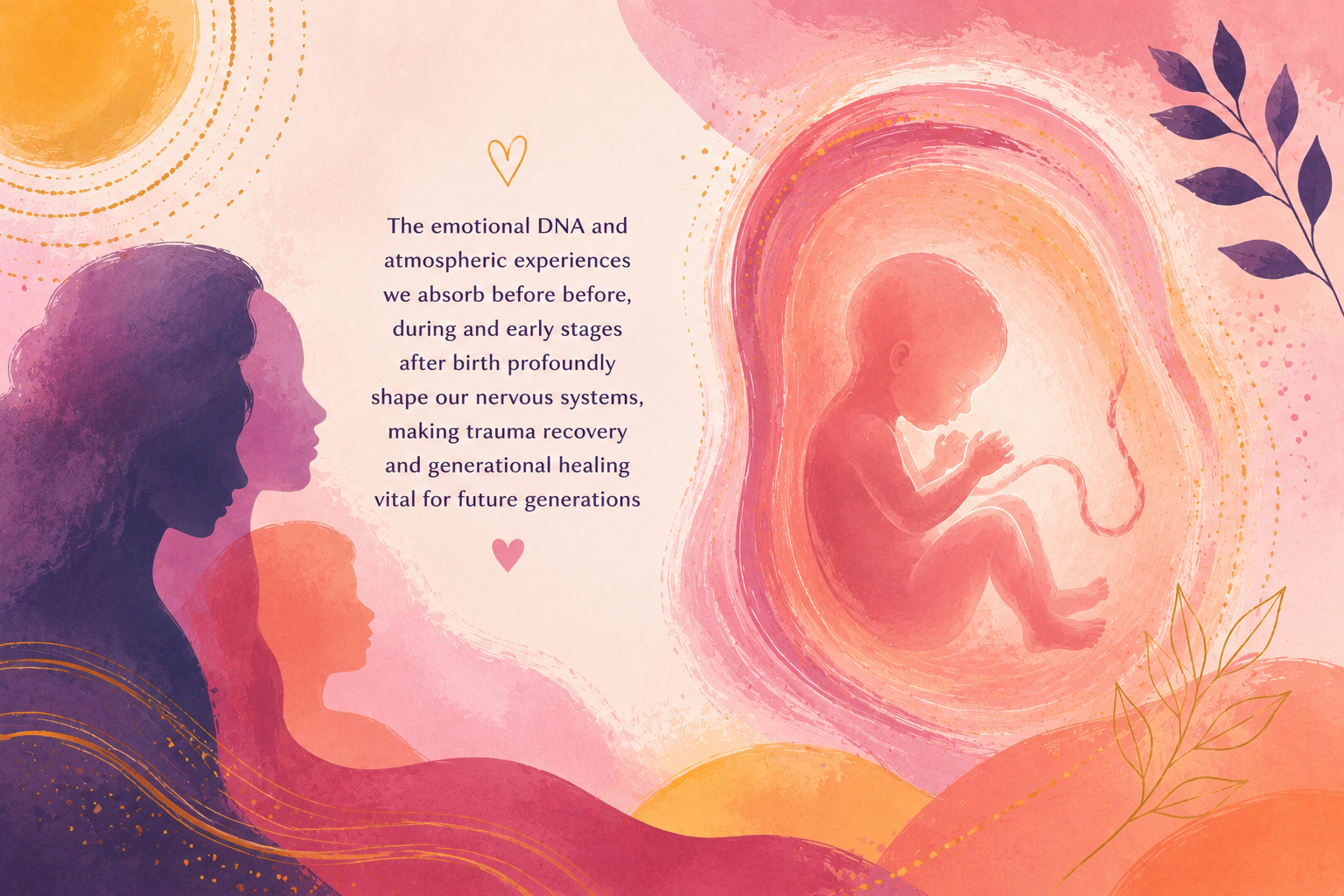
Trauma before autobiographical memory
One of the most important distinctions when discussing early trauma is the difference between impact and memory. We do not have good evidence that adults can accurately retrieve autobiographical memories from their time in the womb. However, a person does not need to consciously remember an experience for early developmental environments to have influenced them.
In therapy, very early material may emerge as sensations, emotional states, protective responses, relational expectations or imagery.
A client may experience a profound sense of:
I'm not safe.
I shouldn't be here.
I'm alone.
I need to disappear.
They may feel an urge to curl their body inward, experience pressure or darkness, encounter an extremely young part, or describe imagery that feels connected to the womb, birth or infancy.
Our role is not necessarily to decide exactly what that experience represents.
Working with early experiences through RI-EMDR
This is one of the spaces where I value Relational Integrative EMDR (RI-EMDR).
RI-EMDR allows us to work with the experience available to the client rather than requiring a detailed autobiographical memory.
Through bilateral stimulation, relational attunement, parts work, imagery, body awareness and resourcing, we can become curious about what is emerging.
Instead of asking only:
“What happened?”
We can also ask:
“What does this part need now?”
Perhaps what emerges is warmth.
Rocking. Protection. A nurturing presence. The adult self. A sense of being welcomed.
Or simply the experience of no longer being alone.
Making room for spiritual and ancestral meaning
For some clients, this work also moves beyond conventional psychological language.
They may encounter ancestors, spiritual figures, protectors, animals, energy, light, nature or a sense of connection to something larger than themselves.
We can remain curious.
What does this experience mean to the client?
What happens in their body when this resource arrives?
What changes for the young part when they are no longer alone?
This allows us to honour a client's spiritual and cultural meaning-making while maintaining appropriate clinical humility.
Intergenerational Healing
Perhaps the deepest work of trauma therapy is not always about remembering what happened. Sometimes it is about reaching the places within us that existed before memory had words — the places shaped through body, relationship, ancestry and our earliest experiences of being in the world. When we bring safety, connection and compassion to these places, we are not simply tending to the past. We are changing what becomes possible in the present, and potentially what is carried into the future. Healing our earliest wounds can become an interruption in the transmission of trauma — a quiet rewriting of what the next generation inherits.